
Global Leading 34CrNiMo6 Wind Turbine Main Rotor Shaft Solutions Provider: Engineering Behind 80+ Ton Forgings
Oct 10, 2026
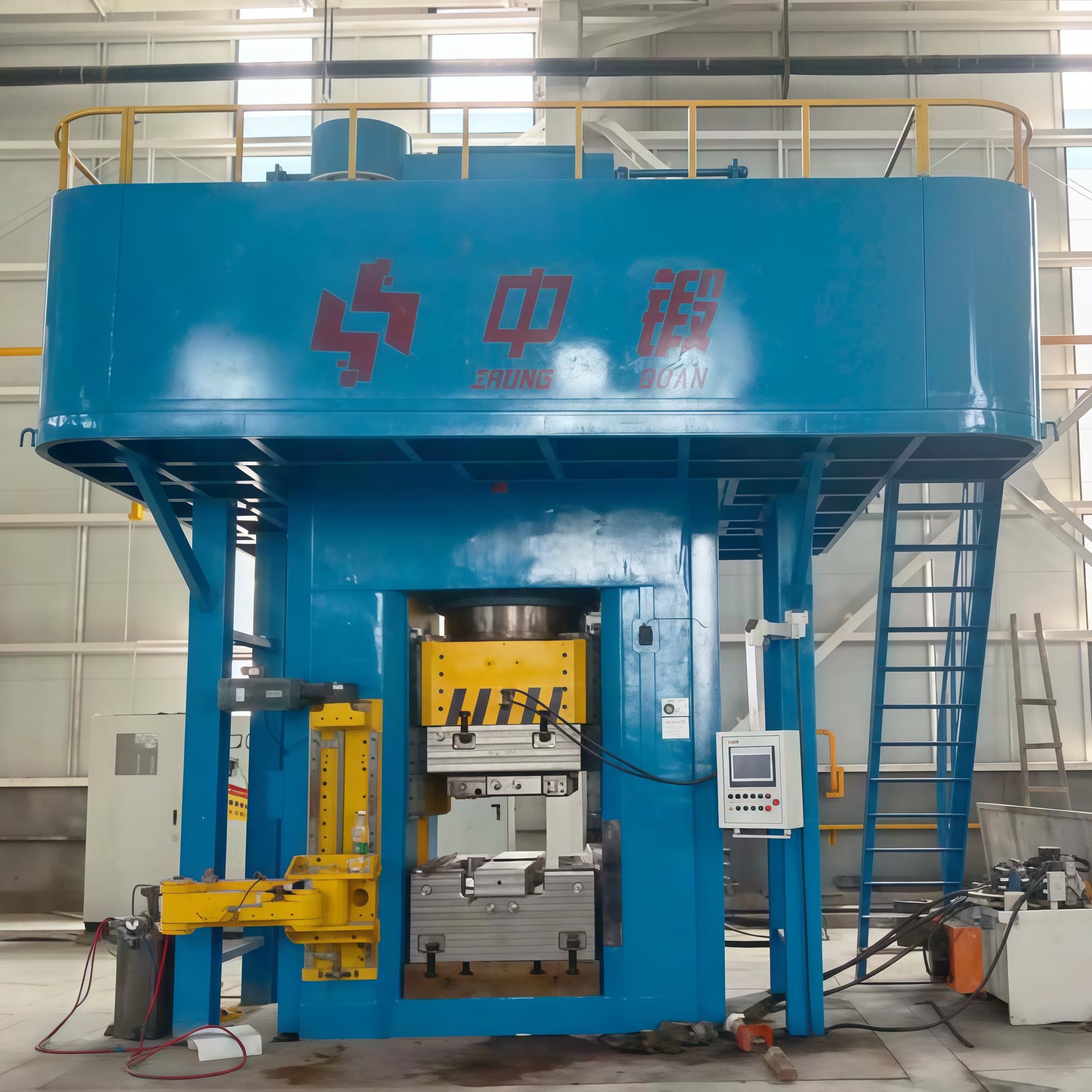
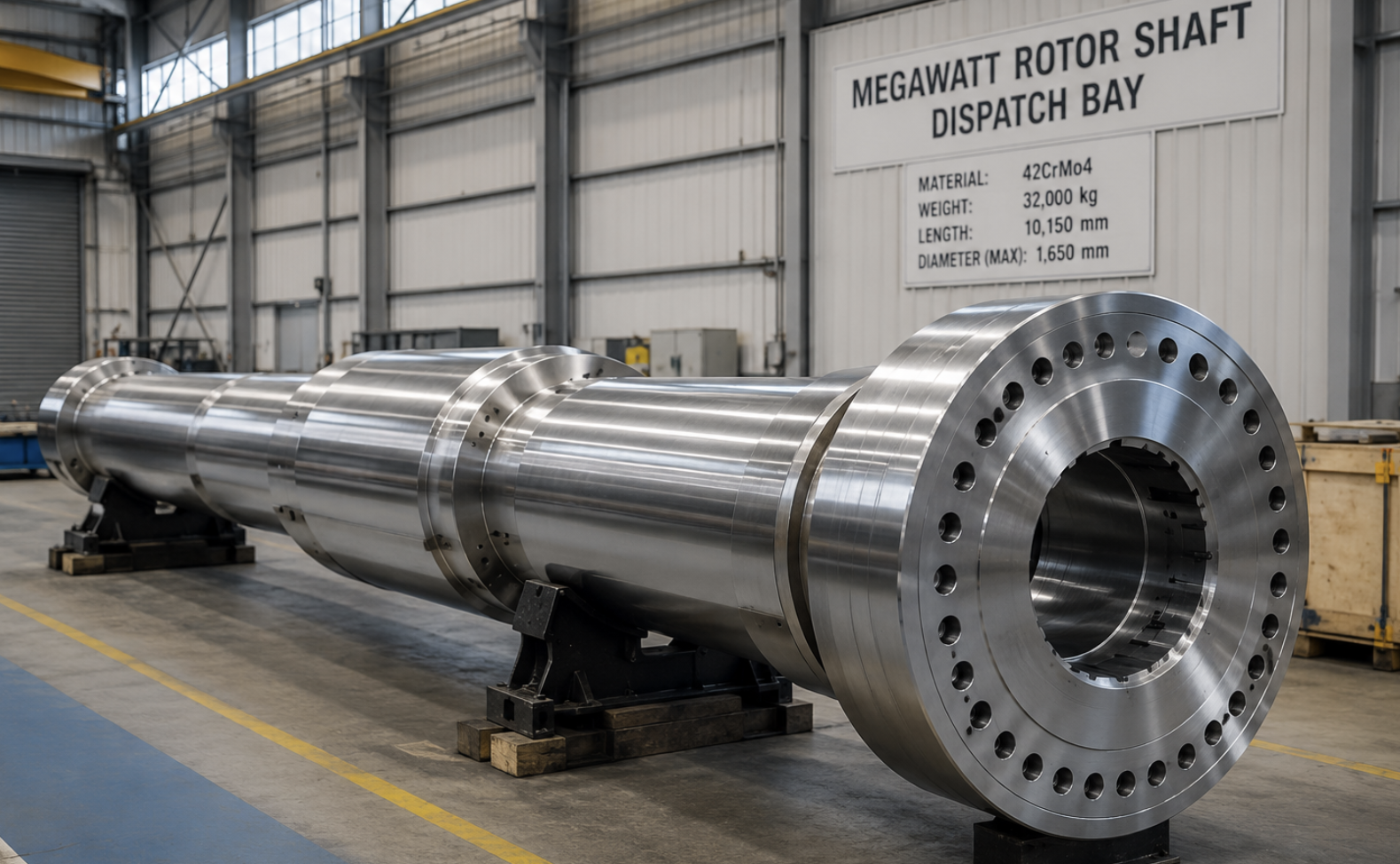
Wuxi, Jiangsu Oct 9, 2026 (Issuewire.com) - The global renewable energy sector scales up rapidly as modern wind turbine capacities shift into double-digit megawatt ranges. This massive structural scaling creates unprecedented engineering challenges for the entire mechanical drive train components. Onshore and offshore wind markets demand larger rotating blades, which significantly increases the loads on core operational assets. The main rotor shaft sits at the critical heart of this operational evolution, bearing heavy multi-directional structural stress. To address these extreme application requirements, WUXI HONGDA HEAVY INDUSTRY CO., LTD applies high-level thermodynamic engineering to manufacture robust industrial forgings. The enterprise occupies a distinct position in the international energy market as a Global Leading 34CrNiMo6 Wind Turbine Main Rotor Shaft Solutions Provider (https://www.hongdaforge.com/34crnimo6-wind-turbine-rotor-shaft-product/) specialized in handling ultra-large components. Developing components for heavy-duty wind applications requires a deep understanding of metal fatigue and industrial metallurgy. This technical progress provides wind turbine original equipment manufacturers with highly predictable structural performance. Consequently, the industry relies on specialized metallurgical engineering to secure the next generation of clean energy installations worldwide. This stable supply of high-integrity components helps stabilize the expanding global renewable energy matrix.
The Torsional Crucible: Deciphering the Multiaxial Dynamic Stress Profiles of Megawatt Main Shafts
Modern multi-megawatt wind turbines face a highly dynamic and punitive loading environment during their extended service life. The rotating blades capture immense aerodynamic forces and transmit them directly through the massive main rotor shaft. Consequently, this critical drive train component experiences a complex combination of continuous bending moments, intense torsional shear, and gyroscopic forces. The shaft must reliably manage these multiaxial stresses under varying wind velocities and sudden environmental changes. Because wind turbines operate in remote offshore fields or isolated mountainous regions, operators demand a strict twenty-five-year design life. Component failures during this timeframe trigger massive maritime crane deployment costs and extensive operational downtime. Therefore, choosing the correct material chemistry remains a fundamental step in the initial asset design phase. The industry utilizes 34CrNiMo6 alloy steel because its precise balanced composition offers exceptional mechanical advantages. This high-grade material provides deep hardenability, high yield strength, and superior impact toughness. These specific properties allow the steel matrix to absorb immense dynamic torque without developing sub-surface structural damage. By choosing this advanced alloy formulation, engineers can design lighter shafts that safely support larger rotor diameters.
Taming the 80-Ton Ingot: Mitigating Center-Line Porosity and Dendritic Segregation
Manufacturing a heavy main shaft requires pouring an ultra-large steel ingot that often exceeds eighty tons in weight. However, cooling a casting of this massive size creates natural metallurgical complications during the solidification process. As the molten metal transitions to a solid state, the core of the ingot naturally cools at a much slower rate than the outer surfaces. This thermal gradient frequently induces microscopic shrinkage cavities, center-line porosity, and severe dendritic segregation. Chemical elements like carbon and sulfur tend to cluster in the remaining liquid portions, creating localized material imbalances. To mitigate these natural casting anomalies, HONGDA HEAVY INDUSTRY implements stringent melt shop regulations and secondary refining practices. The strategic addition of Chromium, Nickel, and Molybdenum plays a vital role in preventing grain coarsening during the extended cooling cycle. Chromium increases wear resistance, Nickel enhances low-temperature toughness, and Molybdenum ensures excellent through-hardening performance. This precise alloy optimization eliminates internal structural non-uniformity before the hot working phase even begins. This rigorous process creates a highly uniform casting block, establishing a flawless foundation for severe structural shaping.
Kinematic Consolidation: The Mechanics of Repetitive Upsetting and Drawing on CNC Fast Forging Complexes
Converting an eighty-ton unrefined cast block into a dense wind turbine shaft requires massive mechanical energy. To deliver this force deep into the core of the metal, HONGDA HEAVY INDUSTRY (https://www.hongdaforge.com/about-hongda/) (WUXI HONGDA HEAVY INDUSTRY CO., LTD) utilizes high-tonnage CNC open-die fast forging presses. These advanced hydraulic systems compress the massive ingot repeatedly at precise operating temperatures. Technicians execute a specialized multi-directional upsetting and drawing forging sequence. This sequence forces the material to deform along three distinct spatial axes. The intense compression shatters the coarse, as-cast dendritic crystal structures completely. Furthermore, the immense pressure closes all internal microscopic shrinkage cavities and welds center-line porosity shut. This deep plastic deformation initiates dynamic recrystallization within the steel matrix. As the metal reforms under the press, new ultra-fine microscopic grains replace the original coarse structures. This mechanical refinement ensures that the finished component possesses identical material soundness across its entire geometry. Through this meticulous process, the heavy machinery transforms the casting into a highly consolidated forging.
Mapping the Fiber Flow: Aligning Continuous Crystallographic Grain Lines for Extreme Fatigue Resistance
The spatial orientation of metal grains within a forged component dictates its ultimate fatigue resistance under operational stress. During the open-die forging process, the intense deformation creates continuous crystallographic grain lines known as fiber flow lines. Experienced forge masters deliberately guide these internal lines to run parallel to the external contours of the main shaft. Specifically, the fiber flow must transition smoothly from the narrow journal steps into the wide mounting flange. Unbroken grain lines ensure that the component can successfully resist intense alternating shear stresses during operation. If the manufacturing process cuts or disrupts these internal lines, the material develops anisotropic weak zones. These localized disruptions can act as stress amplifiers, which allows sub-surface micro-cracks to form under cyclic loads. However, the advanced forging techniques maintain complete fiber continuity across all geometric transitions. This precise alignment substantially elevates the high-cycle fatigue threshold of the main rotor shaft. As a result, the component can withstand billions of torsional cycles without experiencing structural degradation. This engineering achievement provides global wind installations with a reliable mechanism for long-term torque transmission.
Full-Timeline Quality Assurance: HONGDA HEAVY INDUSTRY as a Strategic Wind Energy Partner
Securing international market trust requires complete manufacturing transparency and data-driven verification. Wuxi Hongda maintains full end-to-end traceability across the entire production sequence, starting from the raw material analysis. Every heavy forging undergoes a series of precise post-forge heat treatments to relieve residual manufacturing stresses. Following these thermal processes, quality assurance teams perform exhaustive non-destructive evaluations. Technicians execute multi-angle ultrasonic testing and magnetic particle inspections to verify total internal and external purity. The manufacturing enterprise backs these internal processes with comprehensive international factory approvals and certificates (https://www.hongdaforge.com/certificate/). These credentials validate that the production facility complies strictly with global energy manufacturing mandates. By maintaining these rigorous standards, the company moves beyond the role of a standard component supplier. Instead, the entity functions as a vital strategic partner for global wind turbine OEMs and energy operators. This integrated manufacturing approach provides long-term structural certainty to the global renewable energy supply chain. Turbine designers can confidently integrate these heavy components into high-capacity systems, ensuring reliable clean energy production for decades to come.
To learn more about these advanced forging capabilities, please visit the official website at https://www.hongdaforge.com/.
Source :WUXI HONGDA HEAVY INDUSTRY CO., LTD
This article was originally published by IssueWire. Read the original article here.
More News




Recommended


Tech Now



YOUR NEWS, OUR NETWORK.
Do you have Great News you want to tell the world?
Be it updates about your business or your community, you can make sure that it’s heard by submitting your story to our network reaching hundreds of news sites across 6 verticals.